
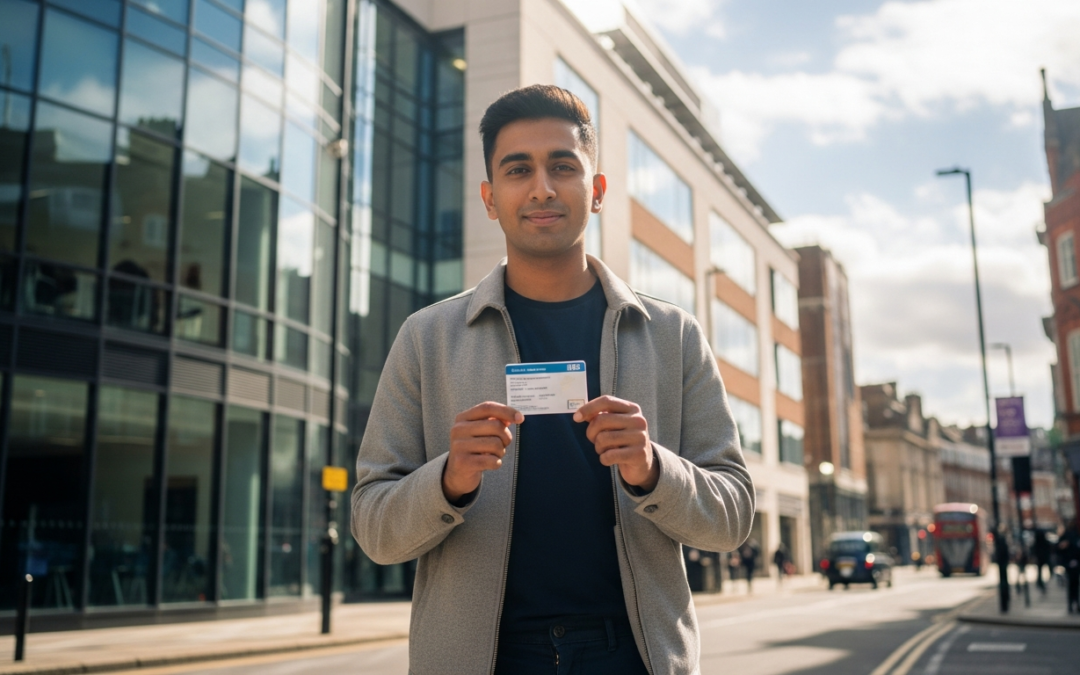
International student health insurance is the line item Indian families most often underestimate when planning an overseas degree. While tuition dominates the budget conversation, the right health insurance product, coverage amount, and provider determine whether a single medical event becomes a manageable claim or a five-figure surprise bill.
For Indian students heading to the UK in 2026, the Immigration Health Surcharge at GBP 776 per year provides access to National Health Service treatment on the same basis as a UK resident, but excludes dental, optical, emergency repatriation, and pre-existing conditions. For the USA, university-mandated plans range from USD 1,500 to USD 3,500 per year and vary in coverage scope. Australia requires Overseas Student Health Cover at AUD 500 to AUD 1,400, while Germany mandates public health insurance at EUR 1,320 to EUR 1,440 per year for enrolled students.
The five most common mistakes Indian students make are buying the cheapest policy without reading the exclusions, failing to declare a pre-existing condition, waiting until arrival to purchase, using a travel insurance policy instead of a student health policy, and buying from a non-recognised provider. Each of these can be avoided with a structured approach: buy a compliant policy at least 60 days before departure, declare all pre-existing conditions upfront, use a provider on the destination country’s recognised list, and retain both the certificate and the full policy document in a personal digital archive.
The practical recommendation for Indian families in 2026 is to allocate between INR 60,000 and INR 1,80,000 per year to health insurance depending on the destination, with the UK, USA, and Australia at the higher end and the Netherlands, Germany, and Canada at the lower end. This allocation covers both the mandatory scheme and a sensible private supplement for the gaps in destination-mandated coverage.
Uniassure scholars receive a pre-negotiated group health insurance plan with 18 percent premium reduction and 24/7 multilingual support, eliminating the most common enrolment barrier reported by 2024 cohort scholars. The plan covers all six major destinations for Indian students and meets both the visa requirements and the minimum coverage thresholds at the partner universities in Uniassure’s network.
The claim settlement process is the second operational detail that determines whether insurance works in practice. For most major destinations, the student pays the provider directly at the point of care, submits the receipt and the diagnosis to the insurer, and receives reimbursement within 14 to 45 days. Documentation discipline is the single biggest determinant of claim success. A clean claim file includes the original hospital invoice, the doctor’s diagnosis, the itemised receipt, the policy number, and the prior-authorisation reference if the treatment was pre-approved.
For Indian students with pre-existing conditions, the disclosure timeline matters as much as the disclosure itself. Most international student policies have a 12-month waiting period for pre-existing conditions, meaning the condition is excluded from coverage for the first year of the policy. By declaring the condition at the time of application and selecting a policy that does not exclude pre-existing conditions, families avoid the most common claim denial scenario.
For families with a multi-year coverage plan, the renewal cycle is the third operational detail to manage. Most destination-mandated schemes (UK IHS, Australian OSHC, Dutch AON) require annual renewal, and lapses in coverage can void a current visa. Uniassure scholars receive automatic renewal reminders 60 days before expiry, with same-day policy certificate reissuance for any of the partner university plans.
You might also like: Health Insurance for Indian Students Studying Abroad 2026, Post-Study Work Visa Guide 2026, Cost of Studying Abroad 2026. Related article: Post-Study Work Rights 2026. Explore Uniassure pathways: Value-Added Courses, UA Assurance. Sources: UK Home Office, Study in Europe.
Written by: Uniassure Academic Intelligence Team
Reviewed by: Uniassure Content Excellence Committee
Strategic Oversight: Vikram S. & Gurinder S., Uniassure Founders