
AI Summary
What Is a University Readiness Program and Why Indian Scholars Need One: the terms university readiness program, foundation programme, pathway programme, and bridging course are often used interchangeably, but they serve different purposes for different. An university readiness programme is a focused preparatory course that develops the academic skills, cultural awareness, and personal confidence needed for success at an overseas university. A foundation programme is more full than a readiness programme. A pathway programme combines foundation-level academic preparation with a conditional admission guarantee.
University Readiness Program vs Foundation vs Pathway: What Is the Difference?
Not all preparatory programmes are the same. The terms university readiness program, foundation programme, pathway programme, and bridging course are often used interchangeably, but they serve different purposes for different scholars. Choosing the wrong one means paying for preparation you do not need or missing skills you do require. This guide explains exactly what each type offers and which one fits your profile.
What is an university readiness programme?
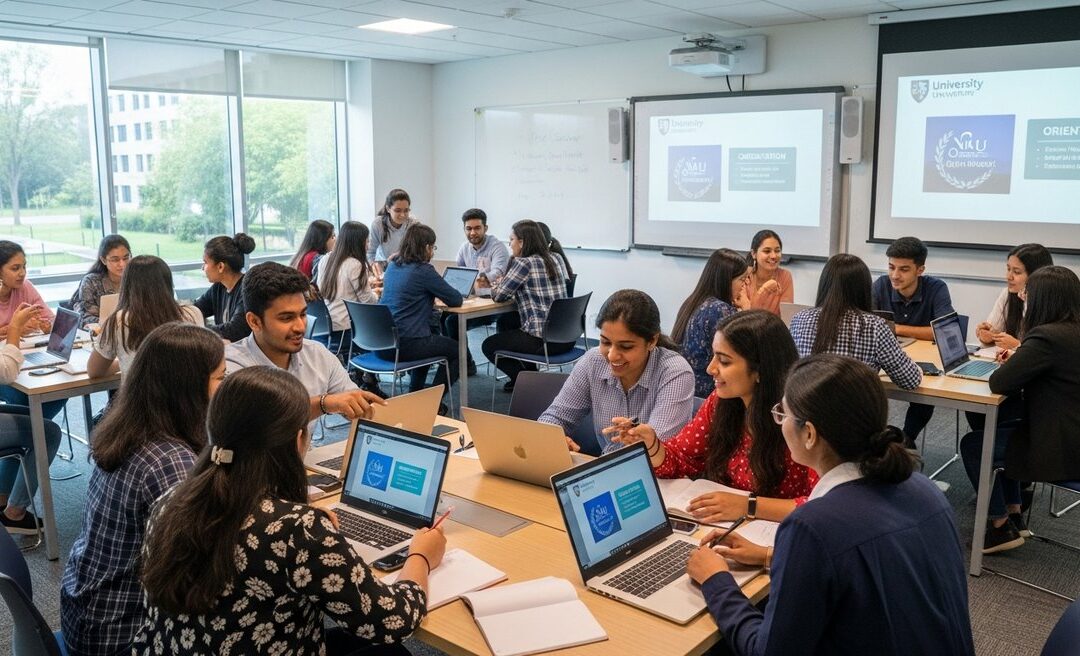
An university readiness programme is a focused preparatory course that develops the academic skills, cultural awareness, and personal confidence needed for success at an overseas university. It does not teach subject content. Instead, it teaches how to learn in a Western academic environment. Core components include academic writing and citation, critical thinking and argumentation, research methodology and source evaluation, presentation and seminar participation skills, time management and independent learning strategies, and cross-cultural communication and adaptation. Duration ranges from 4 weeks to 6 months. It is ideal for scholars who meet academic entry requirements but recognise they need to develop study skills for a different education system.
Foundation programmes: The academic bridge
A foundation programme is more full than a readiness programme. It covers subject-level academic content equivalent to 12th standard or A-levels, in addition to language and study skills training. Foundation programmes are designed for scholars whose previous qualifications do not meet the direct entry requirements for their target undergraduate degree. For example, an Indian scholar with a CBSE 12th standard certificate applying to an UK university that requires A-levels or an International Baccalaureate would take a foundation programme to bridge the gap. Foundation programmes typically last 9-12 months and cost Rs 8-25 lakh at overseas institutions.
Talk to a counsellor
Tell us the country and course you are aiming for and we will map out your eligibility, costs and timeline for the next intake.
Book a free counselling session with ASB Uni Assure
Pathway programmes: Conditional admission
A pathway programme combines foundation-level academic preparation with a conditional admission guarantee. When you accept a pathway programme, you receive a conditional offer from a partner university. Complete the pathway with the required grades, and your admission to the degree programme is confirmed without reapplying. Pathway programmes are offered both at the destination university and through Indian providers with international partnerships. Uniassure’s pathway programmes allow scholars to complete their preparation in India before transferring credits abroad, reducing total programme cost by 40-60% compared to completing the full pathway at the overseas institution.
Bridging courses: Summer preparation
Bridging courses are short, intensive programmes (4-8 weeks) designed for scholars who already meet university entry requirements but want targeted preparation in specific areas. Common bridging courses focus on academic writing, mathematics for business or engineering, programming fundamentals, or English for academic purposes. They are typically delivered during the summer before the main degree programme begins, either online or on campus. Cost ranges from Rs 20,000-2,00,000. Bridging courses work best for scholars with strong academic profiles who need fine-tuning rather than full preparation.
Which programme fits your profile?
If you meet academic entry requirements and have strong English skills but want to understand Western academic expectations: choose a university readiness programme. If your 12th standard qualifications do not meet the direct entry requirements of your target university: choose a foundation programme. If you want a guaranteed progression route to a specific overseas university: choose a pathway programme. If you enter directly but want targeted skill preparation in writing, maths, or programming: choose a bridging course.
Read next
- Bridging the Academic Gap: Why Indian Scholars Need a Readiness Program Before Studying Overseas
- Academic Alignment Program 2026: A Complete Guide for Indian Scholars
- Academic Readiness for International Students: A Complete Guide for Indian Scholars
Frequently Asked Questions
Q: Is an university readiness programme recognised by overseas universities?
Recognition varies; check with your target university directly.
Q: Can I skip a readiness programme and learn the skills myself?
Yes, but structured programmes offer guided feedback and support.
Q: Do readiness programmes help with graduate programmes or only undergraduate?
They benefit scholars at both undergraduate and graduate levels.
Q: What is the cost difference between preparation in India vs abroad?
Indian programmes save 80-95% compared to overseas equivalents.
Q: How do I verify that a readiness programme is legitimate?
Check the provider’s track record, faculty credentials, and partnerships.